









SEO for commercial construction companies that reaches owners and developers.
Commercial construction and design-build SEO for firms selling to owners, developers, and corporate real estate. Not residential trades and not the map pack. Sector, project type, and delivery method pages that get you onto the bid list.
Commercial buyers search nothing like homeowners do.
A homeowner searches for a contractor near me and calls the top three. A developer searches for a design-build firm with medical office experience in the Chicago market, checks the project portfolio, reads about delivery method, and adds two firms to a bid list. Same industry, completely different search behavior, completely different website requirement.
Most commercial construction sites are built like residential ones. A services list, a gallery, a contact form. That structure cannot rank for sector experience, delivery method, project type, or square footage class, which is the entire vocabulary of commercial procurement.
The pages that win here document sector expertise and project type in depth. Medical office fit out. Industrial tilt up. Tenant improvement. Adaptive reuse. Each is a distinct search, a distinct buyer, and a distinct proof requirement, and almost nobody in this market builds them.

Sector, project type, and delivery method each get a page, because each is a separate search.
Commercial construction SEO by sector and delivery method.
Commercial procurement searches by what is being built and how it will be delivered, not by the word contractor.
A page per sector and per delivery method. That is how you appear on a bid list.
Zero-click searches climbed about 23 points in a decade, from roughly 45% to 68%. Owners and developers now do most of their firm evaluation on the results page and inside AI answers before any site visit, which makes the way your sector experience is described publicly a bigger factor in shortlisting than it has ever been.
Sources: SparkToro and Similarweb, June 2026, and SparkToro and Datos, March 2026. Figures current as of August 2026. Full breakdown and method.
The full commercial construction SEO stack.
Built for owners, developers, and corporate real estate, not for homeowners.
Sector page architecture
- A page per sector served
- Project type pages
- Delivery method pages
- Market and submarket coverage
Project portfolio as SEO
- Projects built as indexable pages
- Square footage, sector, and scope detail
- Photography optimized and captioned
- Outcome and schedule proof
Owner and developer content
- Delivery method comparison guidance
- Cost per square foot content
- Permitting and timeline guidance
- Preconstruction and budgeting help
Credentials and bonding capacity
- Bonding capacity and licensing
- Safety record and EMR
- Certifications and affiliations
- Team and key personnel depth
AI answer visibility for contractors
- Quotable sector experience statements
- Entity grounding for your firm
- Question led content for assistants
- Citation tracking in AI answers
Technical SEO foundation
- Fast, crawlable, schema marked pages
- Image heavy portfolio performance
- Clean architecture and internal links
- Core Web Vitals and mobile health
The commercial construction SEO timeline, month by month.
Long sales cycles mean the work has to be in place before the opportunity appears.
Months 1 to 2, the foundation
- Technical audit and fixes
- Sector and project type mapping
- Owner and developer intent research
- Architecture and priorities agreed
Months 3 to 6, build the pages
- Sector and project type pages live
- Portfolio rebuilt as indexable pages
- Delivery method content published
- Rankings move on specific terms
Months 6 to 12, compound the authority
- Competitive sector terms rank
- AI citations begin appearing
- Bid invitations and inbound rise
- Coverage extended to new sectors
We report qualified inquiries and bid invitations, not sessions.
What makes commercial construction SEO different.
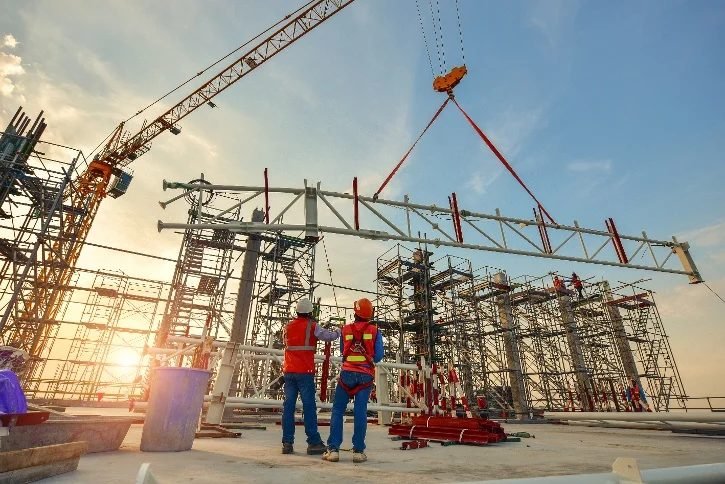
Commercial construction is one of the few local industries where being nearby counts for almost nothing. An owner or a developer is not asking who is closest. They are asking who has delivered this building type, at this scale, on this delivery method, and whether the schedule held.
That proof already exists inside most firms, sitting in a photo gallery that ranks for nothing. Broken out so that each project carries its sector, square footage, delivery method, scope, and schedule, the same portfolio turns into dozens of pages that match how owners actually search and that an assistant can quote when someone asks who builds medical office in Chicago.
The buyer is professional
- Owners, developers, and tenants
- Procurement is structured and formal
- Multiple stakeholders research
- Emotional appeals do not work
No map pack, no near me
- Sector and project type instead
- Delivery method is a real query
- Portfolio depth is the differentiator
- Local intent works differently
Project values are enormous
- One project can define a year
- Low volume, extremely high stakes
- Ranking beats traffic entirely
- Getting on the list is the goal
The cycle runs long
- Research precedes bidding by months
- Relationships form before RFPs
- Content has to exist early
- Presence during research decides invitations
Commercial construction SEO that compounds.
The directions we engineer toward on this kind of engagement.
Figures are representative engagement targets, not promises. Your projection is built from your live data during the audit.
The SEO services behind our commercial construction SEO work.
What owners and developers search before an RFP.
Commercial work is awarded from a shortlist built long before an RFP is issued. Search is how you get on it.
Sector and building type
- General contractor plus a building sector
- Healthcare, education, and industrial builds
- Sector specific compliance and standards
- How owners describe the project
Delivery method
- Design build versus general contracting
- Construction manager at risk
- Preconstruction services
- Terms only serious buyers search
Capability verification
- Bonding capacity and insurance limits
- Similar completed project references
- Safety record and EMR rating
- Where portfolio depth decides the shortlist
Region and jurisdiction
- Contractor plus a metro or county
- Permitting and local code experience
- Union and prevailing wage capability
- Narrow, high value, low competition
How we measure commercial construction SEO results.
Shortlist placements and awarded work. These are the leading indicators.
Invitations and awards
- RFP invitations attributed to organic
- Which sector page produced each
- Bid value and win rate by sector
- Cost per invitation versus business development
Sector visibility
- Rankings by sector and project type
- Delivery method term coverage
- Which sectors you own in search
- Competitor coverage gaps
Portfolio performance
- Project page traffic and engagement
- Time spent reviewing past work
- Return visits before contact
- Which projects drive the most interest
Answer and AI presence
- Snippets on construction questions
- AI citations for contractor queries
- Whether assistants name the firm
- Branded search growth over time
Commercial construction SEO, answered.
Straight answers about search for general contractors and design-build firms.
Talk to a strategistHow is this different from your contractors page?
We win work through relationships. Does SEO matter?
Should our project portfolio be individual pages?
Do we need local SEO?
How long before it produces bid invitations?
SEO for Chicago commercial construction and design-build firms that builds sector, project type, and delivery method pages to reach owners, developers, and tenant improvement buyers evaluating firms for a bid list.
Get on the list before the RFP goes out.
Start with a visibility audit. We show you which sector searches your competitors own, how your portfolio is performing as a search asset, and where the fastest gains are.
A clear read on your search visibility, with no obligation.